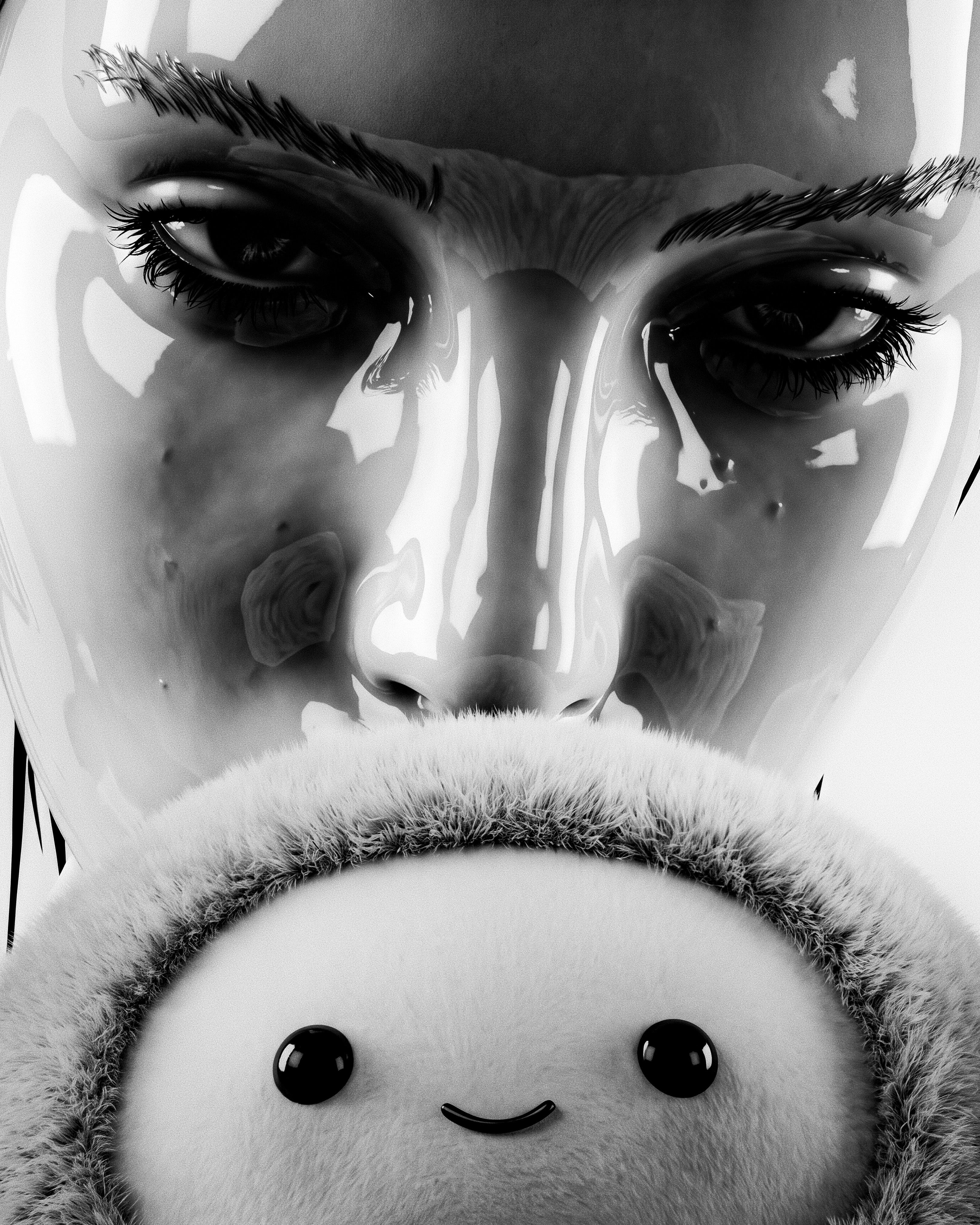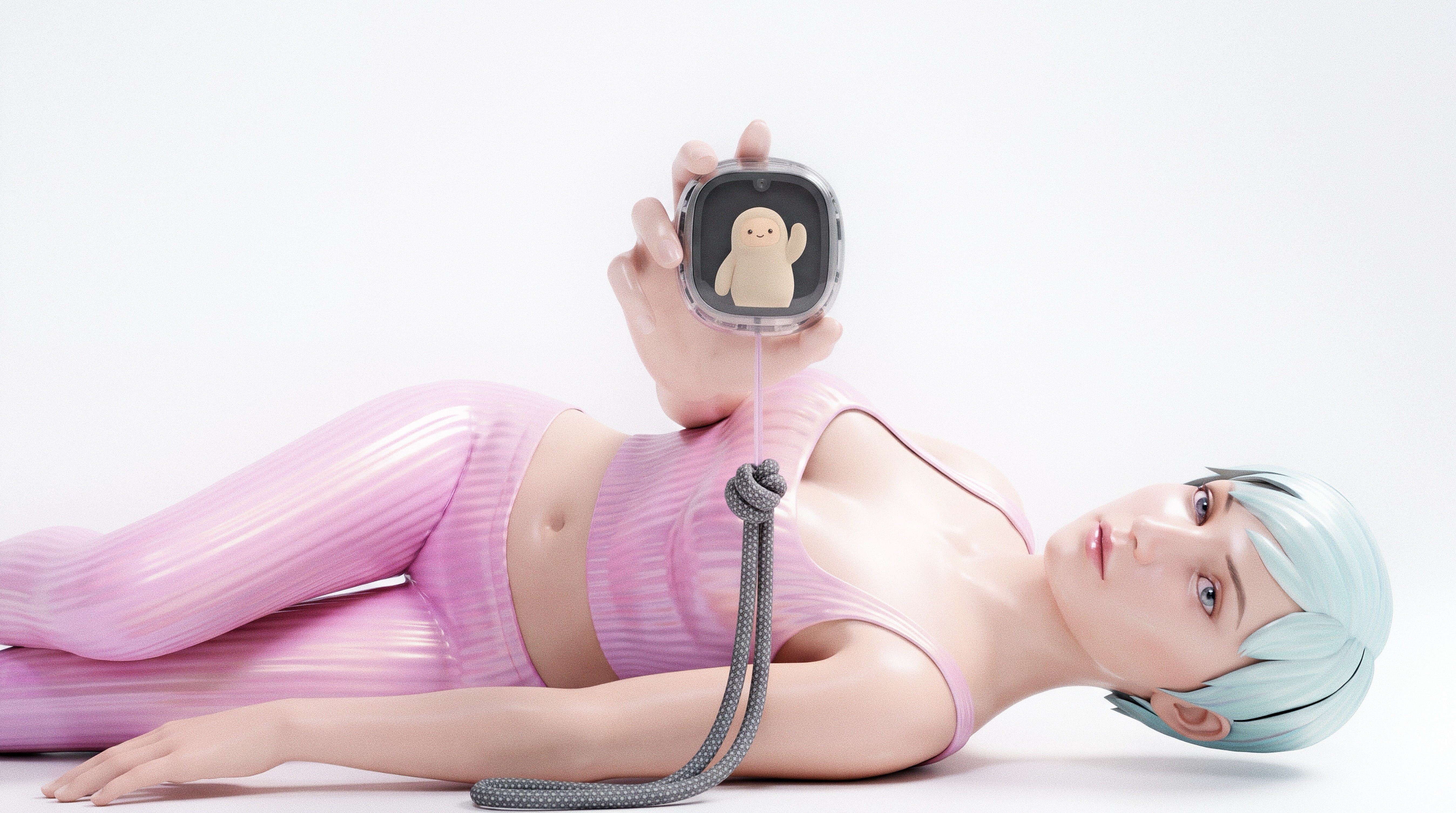
At Meta Connect on 23 September, Mark Zuckerberg introduced the Muse Charm: a small device for talking to Muse, with an animated character on its screen. It looks like a Tamagotchi.[5][6]
The interesting design decision happened before anyone touched the screen. Meta chose a kind of object people already knew how to have a relationship with.
We’re putting our prediction on record: Muse is going to be huge. The success we mean is ordinary people feeling its value in their lives. Downloads alone won’t establish that.
The Charm gives that prediction a physical form.
The object was already on the plinth
On 30 July, our Recent Archaeology release documented a Tamagotchi inside Negative Space. Its accession is IM–RA–021: Portable Dependent Organism. It sits in a room with an iPod, a burned CD, a Motorola RAZR and a handbag, all digitally reconstructed under museum conditions.[1]
The release contained this sentence:
A Tamagotchi asked for care without converting that care into an audience.[1]
That was the behaviour worth preserving. A small electronic object could occupy a place in your life through the particular relationship it asked for.
This is the territory we call peak tech. Certain objects remain desirable after their technical advantage has gone. The form becomes complete enough that another feature would do little for the relationship. You could close the RAZR and the conversation was over. Your iPod contained the music you had chosen to carry. A Tamagotchi gave you something small to look after.
There is an unfinished attachment here. Many of us stopped carrying these objects before we stopped loving them.
PEAK TECH also exists as our playable browser work, built around the body of a machine and the conditions of making a connection.[2] Recent Archaeology preserves the gestures around those objects. The Charm gives that preoccupation a new commercial test.
A form the archive kept has become useful to the present again.
You can be curious without becoming an AI person


People deep in agents and command lines tend to forget how much interest their tools require before they offer anything back. Most people have no desire to develop that interest. Their day already contains enough software.
There is also a difference between disliking AI and refusing anything it might do for you. Someone can be bored by the entire conversation and still want help arranging a trip.
Muse is already software. Meta launched it in the US on 8 September and describes an agent that can work across services, handle tasks such as travel booking, and ask for approval before sensitive actions.[4] The Charm is the separate hardware proposition. December is the reported target; its design and price are not final.[6]
The appeal of the object is that you could hang it on your keys and approach it gradually. Try one thing. Leave it alone for a while. You don’t have to announce a new relationship with technology to find out whether it is useful.
That is where the familiar toy form earns its place. Nostalgia gets you to pick it up. The intelligence has to give you a reason to keep it.

Less technology to manage
When we say we want less technology, we mean less of our lives spent attending to it. A smaller screen does not automatically deliver that. The Charm could still become another thing to charge, configure and supervise.
Its opportunity is to make the capability feel available without making the machinery your occupation. The magic is a task you wanted done getting done, with your permission, while your attention is elsewhere.
Glasses ask for a different commitment. They sit on your face and become part of how other people read you. Meta is already broadening the designs, including audio glasses and fashion collaborations.[5] I still think the larger opportunity requires an HDK, a hardware development kit that lets independent makers build their own frames around the intelligence. A face is too personal for a closed catalogue.
The original Google Glass now makes more sense to me as an ironic peak-tech artefact. The future it proposed has become a look.
A keychain can be much less of a declaration. That is a useful place for a hesitant consumer to begin.

The care changes direction
The original Tamagotchi made its needs your responsibility. You fed it, cleaned up after it and tried to keep it alive.
Zuckerberg’s version proposes the reverse. The small character is there to take some of your tasks off your hands. That is a more consequential change than putting a better computer inside a familiar shell.
People already understand the attachment. Now the object has to earn its place by doing something for the person carrying it.
The affectionate shape does not settle whether Meta deserves that trust. It makes the promise easier to approach; the product still has to keep it. If you spend your day correcting or checking on your agent, you are looking after the Tamagotchi again.
So the prediction, dated 25 September 2026: Muse becomes the first mass-market personal agent whose value is obvious to people who have no particular interest in AI. The Charm is a persuasive route into that relationship, even if the software reaches many more people than the device.
We want less technology to take care of. We’ll say yes to the muse.